
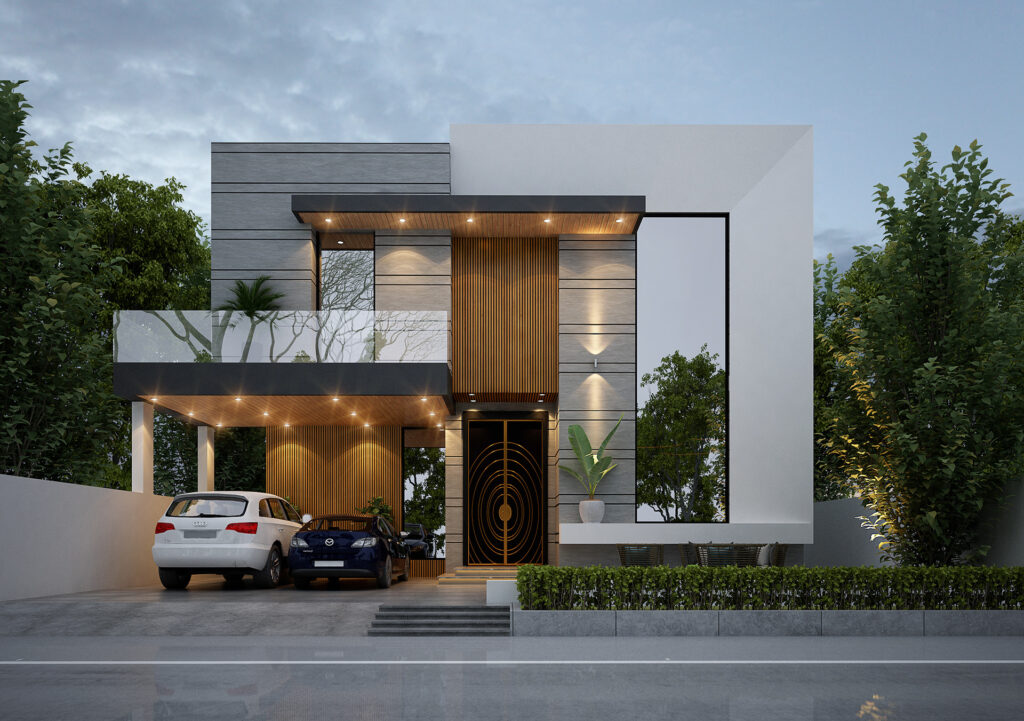
Discreption:
Building a home is one of the biggest financial decisions for any family. If you’re planning to construct a 10 Marla house — whether in Lahore, Islamabad, Karachi, or another city in Pakistan — it’s essential to have a realistic understanding of the costs involved. In 2026, with fluctuating material prices, labour costs and inflation, getting an accurate cost estimate is more important than ever.
In this comprehensive guide, we’ll break down all cost components: grey structure, finishing, plumbing/electrical, fixtures, and provide a full approximate budget range. We’ll also share tips to control costs and avoid surprises.
1. What is a “10 Marla House”?
Before diving into costs, let’s clarify what “10 Marla” means:
- In many parts of Pakistan, a marla is defined as 225 square feet.
- Thus, 10 Marla ≈ 2,250 sq ft of plot area (not always equal to covered/constructed area, because many houses include two floors or more).
- Typically, a 10 Marla house ends up with a built-up area between ≈ 3,200 to 3,800 sq ft (ground floor + first floor + mumty/roof), depending on the design, number of floors, balconies, etc.
Because of this variance, final cost depends heavily on how much built-up area you actually construct, and what standard/quality you’re aiming for (basic, mid, premium, luxury).
2. Key Factors That Affect 10 Marla House Construction Cost
Construction cost doesn’t just depend on plot size — multiple variables affect the final budget. Here are the major ones:
- Quality of materials (bricks, cement, steel, sand, flooring, tiles, fixtures)
- Labour cost and labour market — skilled vs unskilled labour, experience, demand
- Design complexity: single floor vs double storey vs mumty, balconies, basement, architectural elements
- Finish quality: basic finish vs mid-range vs premium or luxury finish — tiles, paint, woodwork, fixtures, bathroom/kitchen fittings
- Plumbing, electrical, and mechanical work — proper plumbing/wiring increases cost compared to bare structure
- City / region — due to variation in material/labour costs across cities (Lahore, Islamabad, Karachi, etc.) Afaq Ahmad Constructions+2gloriousbuilders.com+2
- External factors — inflation, supply-chain issues, delays, weather, soil conditions (affecting foundation), design changes, approvals
Because of these, even two 10 Marla houses in the same city may cost very different amounts if materials or design preferences differ.
3. Typical Cost Components & What They Include
Here are the standard cost components when you build a house:
- Grey Structure: Foundation, walls, RCC slab, roof slab, plaster, basic plumbing & electrical conduits, basic structural work.
- Finishing & Interiors: Flooring/tiles, paint, ceiling, doors & windows, woodwork, bathroom & kitchen fixtures, tiles/marble, exterior plaster or paint, plaster finishing.
- Plumbing & Electrical Installations: Pipes, wiring, fixtures, fittings, bathroom and kitchen plumbing, wiring, sockets, switches, wiring for lights/fans/AC, etc.
- External Works & Miscellaneous: Driveway, boundary walls, water tanks, septic/waste-water work, landscaping, site overheads, contingency/ buffer for price fluctuations, design changes etc.
4. 2025–2026 Cost Benchmarks (Per Square Foot / Per House) in Pakistan
To help you estimate your own budget, here are some of the latest cost benchmarks (2025–2026) based on recent construction-cost data from across Pakistan.
✅ Grey-Structure & Finished House Rates (2025 data)
| Source / Company / Report | Grey Structure Cost (per sq ft) | Finished / Turnkey Cost (per sq ft) | Notes / Observations |
|---|---|---|---|
| General national average (2025) | PKR 2,500 – PKR 3,200 | — | Basic structure only |
| Mid-level projects in Lahore / urban cities | PKR 2,600 – 3,300 | Finished houses in 10 Marla size ~ PKR 9,500,000 – 12,000,000 | For 10 Marla houses |
| 2025 Construction-cost per square foot breakdown for full house (grey + finishing) | Grey: ~ PKR 2,800–3,500; Fully finished (turnkey): ~ PKR 4,700–6,300 | Finished: ~ PKR 4,700–6,300 / sq ft | Including finishing, fixtures etc |
| 2025 average for 10 Marla (single-storey) | PKR ~ 6.3M – 7.9M | — | For ~2,250 sq ft covered area (if single storey) |
Note: These per-sq ft rates are indicative: actual cost can go higher if you choose premium materials, imported fixtures, complex designs, luxury finishes, or add extras like basement, elaborate roof, balconies, etc.
5. Estimated Cost for a 10 Marla House in 2026: Scenario-wise Breakdown
Based on recent data and adjusting slightly for 2026 (assuming modest inflation/material-price increase), here are approximate cost ranges you might expect — for different quality / finishing levels. We give estimates for a 10 Marla house with a built-up area of ~3,300 sq ft (ground + first + mumty) — common for double-storey 10 Marla homes.
| Quality / Scenario | Estimated Total Cost (PKR) | What’s Included / Assumptions |
|---|---|---|
| Budget / Basic Finish (Grey + minimal finishing) | PKR ~ 9.0M – 11.0M | Basic grey structure + minimal finishing, local materials, basic flooring, minimal wood/fixtures |
| Standard / Mid-range Finish | PKR ~ 13.0M – 18.0M | Grey structure + standard finishing (tiles, paint, basic woodwork, local sanitary fittings) |
| Good / Upper-Mid Finish | PKR ~ 18.0M – 22.0M | Better materials/fixtures, decent tiles/ceramic, decent doors/windows, moderate woodwork & tiling |
| Premium / Luxury Finish | PKR ~ 22.0M – 28.0M (or more) | High-quality fixtures, imported tiles/fixtures, marble or premium tiles, better woodwork, good polish/paint, modern kitchen/bathroom fittings, possible extras (balcony, landscaping, better finishing) |
Why such a wide range?
Because “finish level,” “fixtures selection,” “materials quality,” and “design complexity” vary enormously. A simple house with local materials costs much less — while a high-end build can easily exceed the lower-end estimate by 2–3×.
6. Typical Cost Breakdown – What Goes Into the Total
Here’s a rough high-level breakdown (in percentages) of what goes into overall cost (for a mid-to-good quality 10 Marla house):
- Grey Structure (foundation, walls, RCC, basic structure): ~ 35–45%
- Finishing (tiles/flooring, paint, ceiling, plaster, doors/windows, woodwork): ~ 25–35%
- Plumbing & Electrical, Plumbing Fixtures, Basic Installations: ~ 10–15%
- Kitchen / Bathroom Fixtures & Fittings: ~ 5–10%
- Miscellaneous, Finishing Touches, Contingencies: ~ 5–10%
Tip: Always include a buffer / contingency of ≈ 10–15% of total estimated cost to account for material-price fluctuations, design changes, delays, and unforeseen expenses. Afaq Ahmad Constructions+1
7. Why Costs Could Be Higher (or Lower) in 2026
Here are real-world reasons your actual cost may differ from estimates:
- Inflation / Material Price Surge: Cement, steel, sand, bricks, tiles — all subject to price hikes. Even a 5–10% increase inflates total cost significantly. Afaq Ahmad Constructions+1
- Labour Shortages / Skilled Labour Premium: Skilled masons, electricians, carpenters are increasingly in demand — their rates rise.
- Design Complexity: Basements, multiple floors, extra balconies / terraces, fancy ceilings, imported fixtures — add cost.
- Finishing Preferences: Imported tiles, marble, high-end bathroom/kitchen fixtures, woodwork, false ceilings, modern windows — increase cost manifold.
- Soil / Plot Conditions: Hard soil, need for extra excavation, reinforcement, or pilings — increase foundation cost.
- Delays / Errors / Change Orders: Work stoppages, change in plan, design revisions, or wastage — add to cost.
Conversely, costs may stay lower if you: choose simpler design, use local materials, avoid fancy finishing, manage labour/material carefully, avoid import-fittings, plan efficiently, and avoid frequent design changes.
8. Example: Cost Estimate for a 10 Marla House in Lahore (2026)
Suppose you are building a 10 Marla house in Lahore — double-storey (ground + first + mumty), built-up area ~3,300 sq ft, with standard/mid-range finish. Here’s an approximate cost table:
| Item / Phase | Approx. Cost (PKR) |
|---|---|
| Grey Structure (foundation, walls, roof, basic RCC) | ~ 7.5M – 9.0M |
| Flooring, Tiles & Interior Finishing | ~ 3.0M – 4.5M |
| Plumbing & Electrical Work | ~ 0.8M – 1.2M |
| Bathroom & Kitchen Fixtures (sanitary ware, basic cabinets, sinks, etc.) | ~ 0.5M – 0.8M |
| Doors, Windows, Basic Woodwork | ~ 0.4M – 0.7M |
| Paint, Ceiling Work, Final Polishing | ~ 0.6M – 1.0M |
| Contingency / Miscellaneous (overheads, waste, changes) | ~ 0.8M – 1.2M |
| Total Estimated Cost | ~ 13.1M – 18.2M |
This aligns with earlier tables — reinforcing that a mid-range 10 Marla house in 2026 should realistically cost around 13–18 million PKR, depending on choices.
9. Cost-Saving Strategies & Tips for 2026
Building a house doesn’t have to blow your budget. Here are some practical ways to save costs without compromising basic quality:
- Use locally available materials (local bricks, sand, cement) instead of imported ones — they often perform well and cost less.
- Simplify the design: avoid unnecessary complexity — simpler plan, fewer curves, avoid unnecessary architectural flourishes.
- Get a detailed BOQ (Bill of Quantities) — this ensures transparency and helps avoid hidden costs.
- Buy materials in bulk or negotiate rates — it often results in discounts if you buy in large quantities.
- Monitor labor/material usage carefully — avoid wastage. Keep track of materials used vs billed.
- Avoid frequent design changes mid-construction — each change can cost time and money.
- Plan for contingencies — keep at least 10–15% buffer for inflation, delays, and emergencies.
- Phase the finishing over time (if possible) — do basic finishing first, add luxuries later if budget constraints.
- Consult experienced architects/contractors — a good design and proper planning often save more than the cost of design fee itself.
10. Checklist: What You Must Calculate/Budget Before Starting Construction
- Total built-up area (ground + first + mumty) in sq ft
- Quality of materials (basic / mid / premium)
- Labour rates (ask contractors for per-sq ft rate)
- Finishing preferences — flooring, tiles, bathroom/kitchen fittings, woodwork, doors/windows
- Plumbing & electrical requirements: number of bathrooms, kitchen, wiring, fixtures, extra plumbing for water filtration, drainage, etc.
- Extra works: boundary walls, septic/waste-water, water tank, exterior plaster/paint, driveway, gates, landscaping
- Contingency buffer (10–15%)
- Time buffer — delays due to weather, supply issues, labour shortage, design changes
- Approvals / Permits / Society / local authority charges (if applicable)
- Oversight & supervision — avoid shortcuts or substandard work
11. Common Mistakes People Make (and How to Avoid Them)
- Underestimating built-up area: many assume 10 Marla plot means 2250 sq ft built — but with double-storey you may end up building 3000–3800 sq ft, increasing costs.
- Ignoring finishing and fixtures costs: Basic structure cost is only a portion — finishing + fixtures + plumbing + wiring add significantly.
- Not budgeting for contingencies — price hikes, material shortages, delays, wastage, or design changes can blow the budget.
- Being swayed by low quotes — extremely low per-sq ft rates often mean poor-quality materials or workmanship.
- Delaying decision about finishing/fixtures — frequent changes close to finishing phase cause cost & time overruns.
- Poor supervision — Without oversight, contractors might use substandard materials or overcharge for wastage.
12. 2026 Outlook: What to Expect in the Coming Year(s)
- Construction material prices (cement, steel, sand, bricks) are likely to stay volatile — plan a buffer in the budget.
- Demand for mid to high-quality homes in cities like Lahore, Islamabad, Karachi remains high — but people are increasingly cost-conscious.
- More contractors may offer turnkey packages (grey + finishing + fixtures), but always ask for a detailed BOQ and clear breakdown.
- Homeowners are preferring simpler, modern designs (minimalist, functional) rather than ornate architecture — which helps in controlling costs.
- Due to inflation pressures, expect labour and finishing costs to gradually rise — possibly raising total cost by 5–15% compared to 2025.
13. Conclusion: Realistic Budget Range for a 10 Marla House in 2026
After analyzing recent data (2025–2026), material rates, labour costs, and typical construction scenarios across Pakistan, here is a realistic expected cost range for a 10 Marla house (double-storey, ~3,300 sq ft built-up):
- Budget / Basic Finish: ~ PKR 9.0M – 11.0M
- Standard / Mid-Range Finish: ~ PKR 13.0M – 18.0M
- Good / Upper-Mid Finish: ~ PKR 18.0M – 22.0M
- Premium / Luxury Finish: ~ PKR 22.0M – 28.0M (or more)
These estimates exclude the cost of land / plot — which is a separate expense entirely.
Bottom line: For most middle-class to upper-middle-class families in 2026, a mid-range 10 Marla house can be built for around PKR 15–20 million (assuming reasonable finishing and no extravagant luxuries).
15. Summary – Key Takeaways (Bolt Points)
- 10 Marla ≈ 2,250 sq ft plot; built-up area usually 3,200–3,800 sq ft for double-storey.
- Typical grey-structure cost in 2025 ~ PKR 2,500–3,300 per sq ft; finished / turnkey cost ~ PKR 4,700–6,300 per sq ft.
- For a 10 Marla house in 2026: expect PKR 13–18 million for a decent mid-range build; more for higher finish.
- Final cost heavily depends on material quality, finishing, fixtures, labour rates, and design complexity.
- Always budget a 10–15% contingency buffer for price fluctuations and unpredictable costs.
- Planning, supervision, and a clear BOQ can save you significant money and avoid hidden costs.